Product Update
Is Foldio Still in Business? (2026 Update)
Is Foldio from Dragons’ Den still around in 2026? The deal it made, the dragons who invested, and where to buy Foldio today.



Where to buy Foldio
Check the current price and availability on Amazon.
Affiliate link — we may earn a commission at no extra cost to you.
Foldio was one of the earliest deals in Dragons' Den history, a teenage founder's stationery invention backed by Theo Paphitis back in series 4. It did not last. The company ceased trading years ago, and the founder has long since moved on to a completely different business. If you came here hoping to still buy a Foldio, you will not find one.
The Short Answer
Foldio is no longer in business. According to its Companies House filing history, the company ceased trading in 2015, and there is no current website or retailer selling the product. It never had an Amazon listing to speak of, and there is nothing to buy from any source today.
This is one of the clearer closures in our index. The company's own official filings confirm it stopped trading, so there is no ambiguity to hedge on here.
The Dragons' Den Pitch
Christian Lane pitched Foldio in series 4, episode 4, at just 19 years old. His product was a stationery folder designed to halve the size of A4 paperwork by curving documents rather than creasing them, letting people carry bulky paperwork in a smaller, tidier form without permanent fold lines. He asked for £80,000 in exchange for 35 percent of the business.
A young founder with a genuinely clever, simple physical product is exactly the kind of pitch the early series of Dragons' Den built its reputation on, and Theo Paphitis in particular built much of his early Den profile backing straightforward consumer products like this one.
The Deal That Got Done
Theo Paphitis backed the business, investing the full £80,000 requested for the 35 percent on offer, no changes to the terms. Theo's own background in retail made him a natural fit for a physical stationery product that needed to find its way onto shelves.
For a while, that backing helped Foldio get real traction, with the product picking up retail attention in the years immediately following the pitch.
Why It Closed
The company's decline tracks a broader shift in how people carry documents. As designers and other professionals moved away from lugging around large printed sheets in favour of iPads and digital files, the market for a product built specifically to shrink physical paperwork shrank right along with it. The growth potential simply was not there anymore.
Christian Lane recognised the ceiling and moved on. He went on to found Smarter, a company building WiFi-enabled kitchen appliances including smart kettles, coffee makers and fridge cameras, a considerably larger and more durable business than Foldio ever was.
A Product Ahead of a Market That Moved On
Foldio's story is a fairly clean example of a genuinely clever product losing its market to a shift in technology rather than to poor execution or a bad deal. The core problem it solved, carrying bulky printed A4 documents in a smaller form, was real and common at the time it pitched, and Theo Paphitis's backing reflected a sound read of the demand as it existed then.
The shift away from printed paperwork toward tablets and digital files happened relatively quickly across the professions Foldio targeted, particularly design and architecture, and a physical accessory built around paper simply had less and less to hold. It is worth remembering that even a well-funded, well-executed idea can still be overtaken by a change in how people fundamentally work, and Foldio's closure has more to do with that shift than with anything the founder or the Dragon backing him got wrong.
It also illustrates why some of the more durable Dragons' Den success stories belong to founders willing to walk away from an idea once its ceiling becomes clear, rather than trying to force a shrinking market to keep supporting a product it no longer needs, which is exactly the pivot Christian Lane made when he moved on to Smarter.
Where Things Stand Now
Recap: Christian Lane pitched Foldio in series 4 asking for £80,000 for 35 percent, and Theo Paphitis closed that exact deal.
The company ceased trading in 2015 as the market for its core product declined, and it has not resumed since. There is nothing to buy today.
If you are trying to work out whether Foldio survived, it did not, but its founder's next venture has done considerably better.
As an Amazon Associate, Dragons' Den Index earns from qualifying purchases.
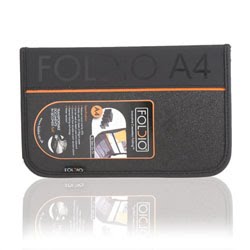
Where to buy Foldio
Still selling as of 21 January 2026. Check today's price and availability.
Affiliate link — we may earn a commission at no extra cost to you.
See the full Foldio deal breakdown and term sheet →
More from Home & Lifestyle
 Deal
DealLe Beanock
A beanbag hammock
 Deal
DealElizabeth Galton Ltd
Custom-made jewellery
 Deal
DealSnowbone
Handle attachment for snowboards
 Deal
DealSquare Mile
Wireless broadband supplier to UK marinas