Product Update
Is The Great British Porridge Company Still in Business? (2026 Update)
Is The Great British Porridge Company from Dragons’ Den still around in 2026? The deal it made, the dragons who invested, and where to buy The Great British Porridge Company today.
Where to buy The Great British Porridge Company
Check the current price and availability on Amazon.
Affiliate link — we may earn a commission at no extra cost to you.
The Great British Porridge Company is one of the more unusual Dragons' Den stories on record. Founder Jacqueline Barleycorn walked out with offers from all five Dragons in the room, then turned them all down. The short answer to whether the company is still in business is yes, and it did not need the Den's money to get there.
The Short Answer
The Great British Porridge Company is still trading and still selling porridge products through its own website and retail partners. It does not sell on Amazon. The company built its post-show growth almost entirely on the publicity from the episode rather than on Dragon money, which makes it one of the more interesting outcomes in the show's history.
For a small food brand, staying on supermarket shelves years after a single TV appearance is a genuinely strong result.
The Pitch
The Great British Porridge Company appeared in Series 17, Episode 2, pitching for £60,000 in exchange for 22 percent of the business. Barleycorn's pitch centred on a premium, distinctly British take on porridge, at a time when the category was mostly own-label supermarket sachets.
It worked. All five Dragons made offers, an unusual outcome that only happens a handful of times across the show's run. That kind of unanimous interest is a strong signal that the panel saw both a real product and a founder who could execute.
A five-offer pitch is rare enough that it tends to generate its own headlines independent of whatever happens next, and this one was no exception. When every investor at the table wants in, the founder suddenly has genuine leverage to negotiate on their own terms rather than simply accepting whatever is put in front of them.
The Deal That Was Offered, and Turned Down
Tej Lalvani made the winning offer on camera: £60,000 for 22 percent, matching the original ask. Barleycorn shook on it in the studio. That is what our index reflects as the deal.
But the story did not end there. In the weeks after filming, the show's exposure sent sales through the roof, well beyond what the company had projected when it walked into the Den. With that momentum in hand and a stronger valuation than the one she had pitched on air, Barleycorn made the decision to walk away from the £60,000 offer rather than complete it.
That is an unusual sequence, and it only makes sense once you consider the lag between filming and broadcast. Deals struck in the studio are often finalised months later, once the episode has actually aired and the company can see how the market responds. By the time the paperwork would normally be signed, the business Barleycorn was negotiating from was a materially different, and stronger, one than the business that walked into the Den.
Why She Said No
Turning down a completed Dragons' Den handshake is rare, and it usually only happens when the business genuinely outgrows the terms that were agreed on camera. That appears to be exactly what happened here. The company was placed into nearly 600 Sainsbury's stores and lined up an expansion into Waitrose, alongside export deals into Singapore, Malta and Germany, all in the immediate aftermath of the episode.
Once a business is moving that fast, giving up 22 percent for £60,000 starts to look like the wrong trade. Barleycorn chose to keep more of the company rather than take the cash, betting on the momentum the show itself had created.
It is a decision that only looks obvious in hindsight. At the time, walking away from a signed studio deal risked being read as a snub to the Dragon involved, and there was no guarantee the retail momentum would hold once the initial post-broadcast attention faded. It held.
Where Things Stand Now
The Great British Porridge Company pitched in Series 17 for £60,000 and 22 percent, won offers from every Dragon in the room, and then declined the deal once post-show sales made the original valuation look too cheap.
Years later, the company is still selling porridge, still running its own site, and still trading on the reputation it built in that one unusual episode. If you came here wondering whether the business survived without Dragon money, the answer is that it did rather well without it, expanding into major UK supermarkets and international export markets on the strength of its own sales rather than an investor's cheque.
As an Amazon Associate, Dragons' Den Index earns from qualifying purchases.
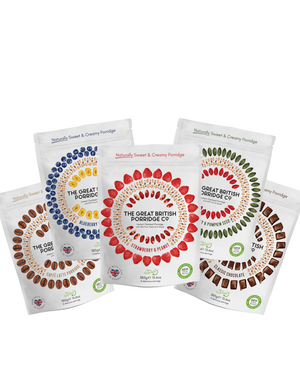
Where to buy The Great British Porridge Company
Still selling as of 28 May 2026. Check today's price and availability.
Affiliate link — we may earn a commission at no extra cost to you.
See the full The Great British Porridge Company deal breakdown and term sheet →