Product Update
What Happened to Trunki After Dragons’ Den?
Trunki left the Den without a deal. Here is what happened next: how the pitch went, why the dragons passed, and where Trunki is today.
Where to buy Trunki
Check the current price and availability on Amazon.
Affiliate link — we may earn a commission at no extra cost to you.
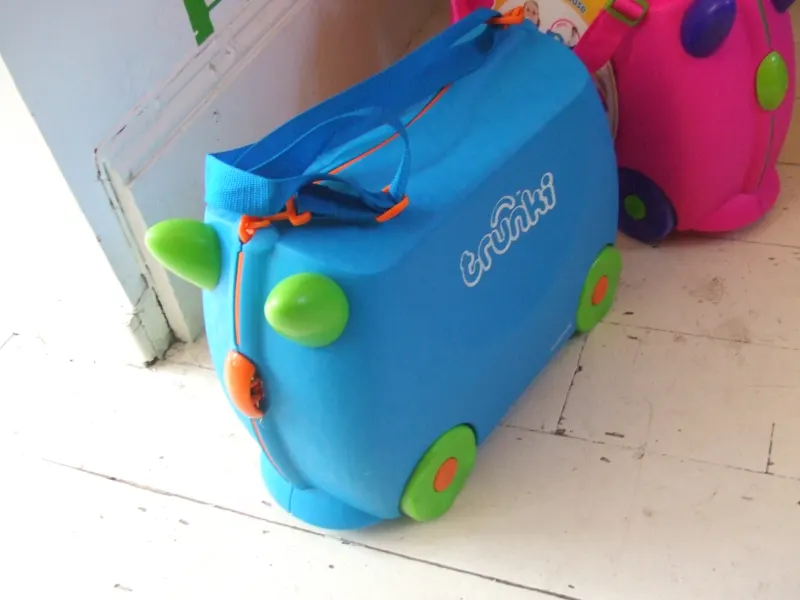
Trunki is the Dragons' Den story people bring up when they want to make a point about the Dragons getting it wrong. Rob Law asked for £150,000 for half his ride-on children's suitcase company, was turned down by every Dragon in the room, and then went on to sell more than five million units worldwide. It is one of the most famous no-deals in the show's history, and it did not slow the company down at all.
The Short Answer
Trunki is still in business, though it now operates under new ownership rather than Rob Law's. The brand continues to sell, and the product Law pitched in the Den is still on shelves nearly two decades later.
That is the unusual part of this story. Most no-deal pitches fade. Trunki did the opposite, becoming one of the best-known toy brands to ever appear on the show, deal or no deal.
The Pitch
Rob Law brought Trunki, a ride-on suitcase for children, into the Den in series 3, episode 8, pitching in the Kids & Education category. He asked for £150,000 for 50 percent of the company, a valuation that made several Dragons visibly uneasy before they had even seen the product properly.
The pitch became notorious for one moment in particular: Theo Paphitis tried to sit on the suitcase to demonstrate its weakness and the shell cracked. It made for dramatic television, and it also became a permanent part of Dragons' Den folklore.
No Deal, and What Came Next
Every Dragon passed. No offer, no counter-offer, nothing. Law walked out with the company entirely his own, which in hindsight is exactly what let Trunki become the story it became.
Rather than fold, Law kept building. Trunki went on to sell over five million suitcases globally, became a fixture of family travel, and turned into a genuine British manufacturing success story, the kind of case study business schools use when they teach founders not to take a single rejection as the final word.
The Exit
Rob Law sold Magmatic, the parent company behind Trunki, to the e-commerce firm Heroes in February 2023 for around £12 million. That is a striking number for a product a national television panel once refused to fund at any price.
Law was awarded an MBE for Services to Business in 2011, largely on the strength of what Trunki had already become by that point. Since selling the company, he has moved into speaking, writing, and new ventures, including projects in infant sleep and Amazon brand strategy, while remaining closely associated with the Trunki story whenever Dragons' Den comes up.
Law has also written openly about the toll the Den appearance took on him personally at the time, describing years of feeling defined by a single televised setback even as the company thrived commercially. In interviews he has said the experience shaped how he now advises other founders to handle public rejection, treating it as data rather than a verdict.
Why the No-Deal Became a Legend
Trunki's story keeps getting retold because it is such a clean example of a panel misjudging durability. A cracked suitcase shell on camera made for great television, but it said nothing about whether children would want to ride the thing through an airport, and they clearly did, in their millions.
It also helped that Law never treated the rejection as final. He kept manufacturing, kept refining the design, and kept pushing into international markets long after the episode had aired and been forgotten by most viewers, which is ultimately what separates a viral clip from a lasting business.
Where the Brand Stands Now
Trunki continues to trade under its new ownership, still selling the ride-on suitcases that made it famous, with the product essentially unchanged in concept from the one that split a suitcase shell on live television.
For a brand that got a flat no from five investors on its founding pitch, that kind of staying power says more about the product than any deal ever could have.
The Bottom Line
Trunki asked for £150,000 for 50 percent, got nothing from the Dragons, and built a five-million-unit-selling global brand anyway before its founder sold the company for £12 million in 2023.
It remains the standard reference point for anyone arguing that a no from the Den is not a verdict on the business. If you were wondering whether Trunki survived, it did more than survive. It became one of the biggest stories to ever come out of that room.
As an Amazon Associate, Dragons' Den Index earns from qualifying purchases.
Where to buy Trunki
Still selling as of 28 June 2026. Check today's price and availability.
Affiliate link — we may earn a commission at no extra cost to you.
See the full Trunki deal breakdown and term sheet →
More from Kids & Education
 Deal
DealBedlam Puzzles
3-D puzzles
 Deal
DealTruly Madly Baby
Baby products, via party evenings and web
 No Deal
Yogabugs
Children's yoga and mindfulness activity
 No Deal
Smartchartz
Picture system to discourage bad behavior in children