Product Update
Is Rollersigns Still in Business? (2026 Update)
Is Rollersigns from Dragons’ Den still around in 2026? The deal it made, the dragons who invested, and where to buy Rollersigns today.
Where to buy Rollersigns
Check the current price and availability on Amazon.
Affiliate link — we may earn a commission at no extra cost to you.
Rollersigns turns dead space, the retractable belt barriers you queue behind at airports, cinemas and shops, into advertising space, by fitting a printed roller banner inside the stanchion itself. It pitched in Series 9, watched its on-air deal collapse after filming, and kept trading anyway. It is still around today.
The Short Answer
Rollersigns is still in business. The product is used across airports, shopping centres and visitor attractions worldwide, and the company now operates through both a UK site and a separate US-facing site, evidence of a business that grew well beyond its original pitch rather than shrinking after it.
Belt-barrier advertising also has an obvious appeal to venue operators beyond the advertising revenue itself, it turns an unavoidable customer touchpoint, the queue, into something slightly more engaging, which is part of why airports and attractions in particular have proven receptive to the format over the years.
The Pitch
Founder Robert Lewis brought Rollersigns into Series 9, Episode 4, pitching a genuinely clever bit of product design: a cassette that fits into the existing retractable belt barriers found in queue systems everywhere, letting the banner pull down like a roller blind and swap out in under two minutes.
According to our index, the ask was £100,000, an unusually large equity stake attached to that figure, which suggests a founder who needed a lot of runway and was willing to trade heavily for it.
An ask of £100,000 against the full company is an aggressive equity position to offer, and it likely reflects a founder who needed substantial capital to manufacture and distribute the product at any real scale.
The Deal That Didn't Survive Due Diligence
Kelly Hoppen made an offer in the Den, but it never converted into an actual investment. Reporting at the time says the deal hinged on Rollersigns proving that a specific order had been placed as described on air, and that proof was not forthcoming, so the investment was withdrawn.
That is one of the more concrete examples of why not every on-air yes turns into a real cheque, the deal here did not fall through on vague grounds, it fell through on a specific, checkable claim that did not hold up.
Deals collapsing over unverifiable claims made on air are one of the more avoidable failure modes in the format, once the show is filmed a Dragon's team will typically want documentation for anything stated as fact during the pitch, and if that documentation cannot be produced, the deal usually does not survive.
How the Business Survived Without the Dragon
Losing the investment did not end the company. Rollersigns kept trading independently and expanded its footprint well beyond the UK, the product is now installed in airports, shopping centres and attractions across multiple countries, and the business operates a dedicated US site alongside its UK operation.
That is a useful reminder that a collapsed Den deal is not automatically a death sentence. Plenty of founders walk away from a failed on-air deal and build the business on their own terms instead, which appears to be exactly what happened here.
The company's current international footprint, sites serving both UK and US markets, also suggests the underlying product had genuine demand outside the specific order dispute that sank the Den investment, a single unproven order claim does not necessarily reflect the overall health of the business relationship with its wider customer base.
Where Things Stand Now
Here is the recap. Rollersigns pitched belt-barrier advertising in Series 9, was offered £100,000 by Kelly Hoppen on air, and then watched that investment get withdrawn when a key claim could not be verified.
The company kept going regardless, and today it is a genuinely international operation with both UK and US sites. If you are asking whether Rollersigns is still in business, it clearly is, just without the Dragon.
For anyone weighing up whether a collapsed on-air deal always means a company is in trouble, Rollersigns is a useful counterexample, the investment fell through for a specific, narrow reason, and the underlying business went on to grow well past where it stood at the time of the pitch.
Common Questions
Did Rollersigns get the Dragons' Den investment? No. Kelly Hoppen made an offer on air, but it was withdrawn after the company could not prove a specific order had been placed as described during the pitch.
Is Rollersigns still trading? Yes. The product is used in airports, shopping centres and attractions internationally, and the company now runs both UK and US-facing websites.
What does Rollersigns actually sell? A retrofit cassette that fits inside existing retractable belt barriers, letting a printed advertising banner pull down like a roller blind in under two minutes.
As an Amazon Associate, Dragons' Den Index earns from qualifying purchases.

Where to buy Rollersigns
Still selling as of 19 April 2026. Check today's price and availability.
Affiliate link — we may earn a commission at no extra cost to you.
See the full Rollersigns deal breakdown and term sheet →
More from Business Services
 Deal
DealUmbrolly
Multimedia vending unit selling umbrellas and adverts
 Deal
DealAlpine Cleaning
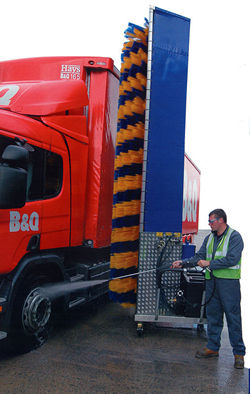
Franchised HGV cleaning service
 Deal
DealFirst Light Solutions
A sonar-based man-overboard detection system
 Deal
DealIgloo
Specialist chilled and frozen transport services